 Unleash the power of AI learning
 BOOK SUMMARY
Navigating The Landscape: Of K-12 PREPAREDNESS
Lessons Learned from COVID-19 — and What Schools Must Do Next
Emergency Preparedness for K–12 Online Teaching
Introduction and Context
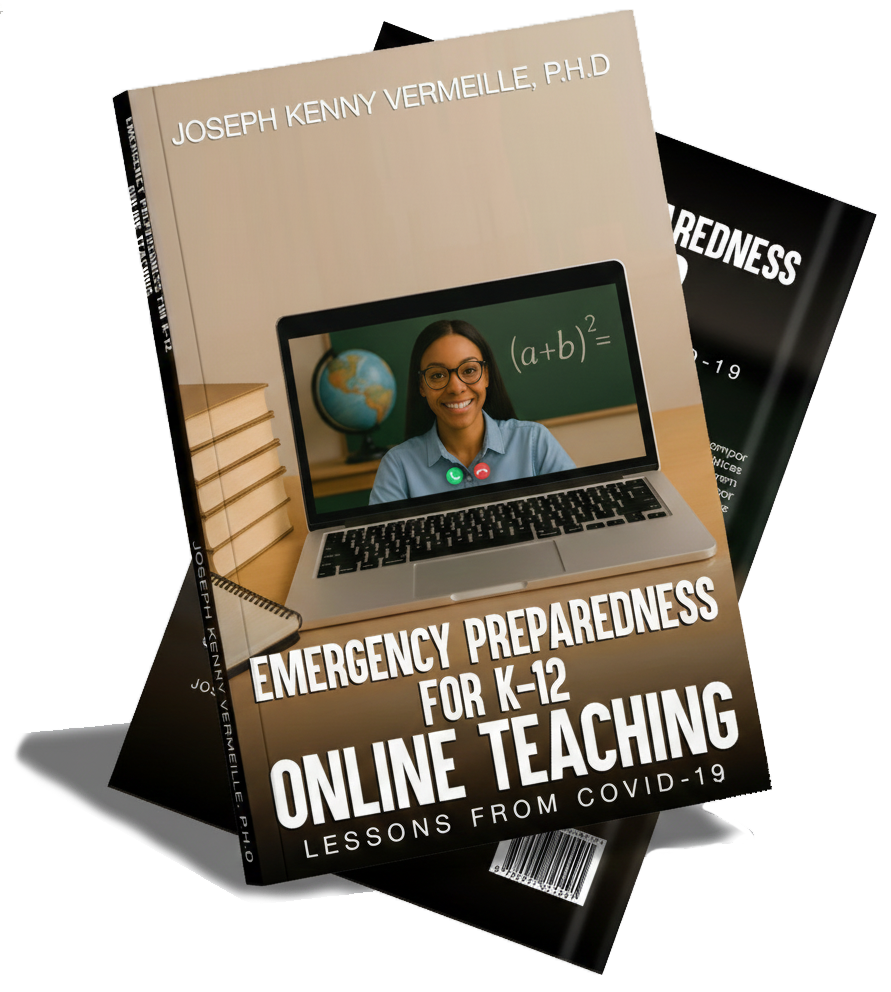
This section contextualizes the unprecedented disruption caused by COVID-19, revealing systemic vulnerabilities in K–12 education. It discusses the historical focus on localized emergencies, the rapid and challenging pivot to online learning, and the resulting gaps in digital infrastructure, teacher training, and equity. The introduction establishes the book’s purpose: to provide a research-based roadmap for resilient, technology-enabled education systems.
Abstract
The Abstract outlines the book’s comprehensive exploration of the COVID-19 pandemic’s impact on K–12 education and presents actionable solutions for continuity and resilience. It highlights the use of empirical research, global case studies, and practical tools, making the book essential for educational stakeholders seeking to embed innovation, equity, and sustainability in emergency planning.
Preface
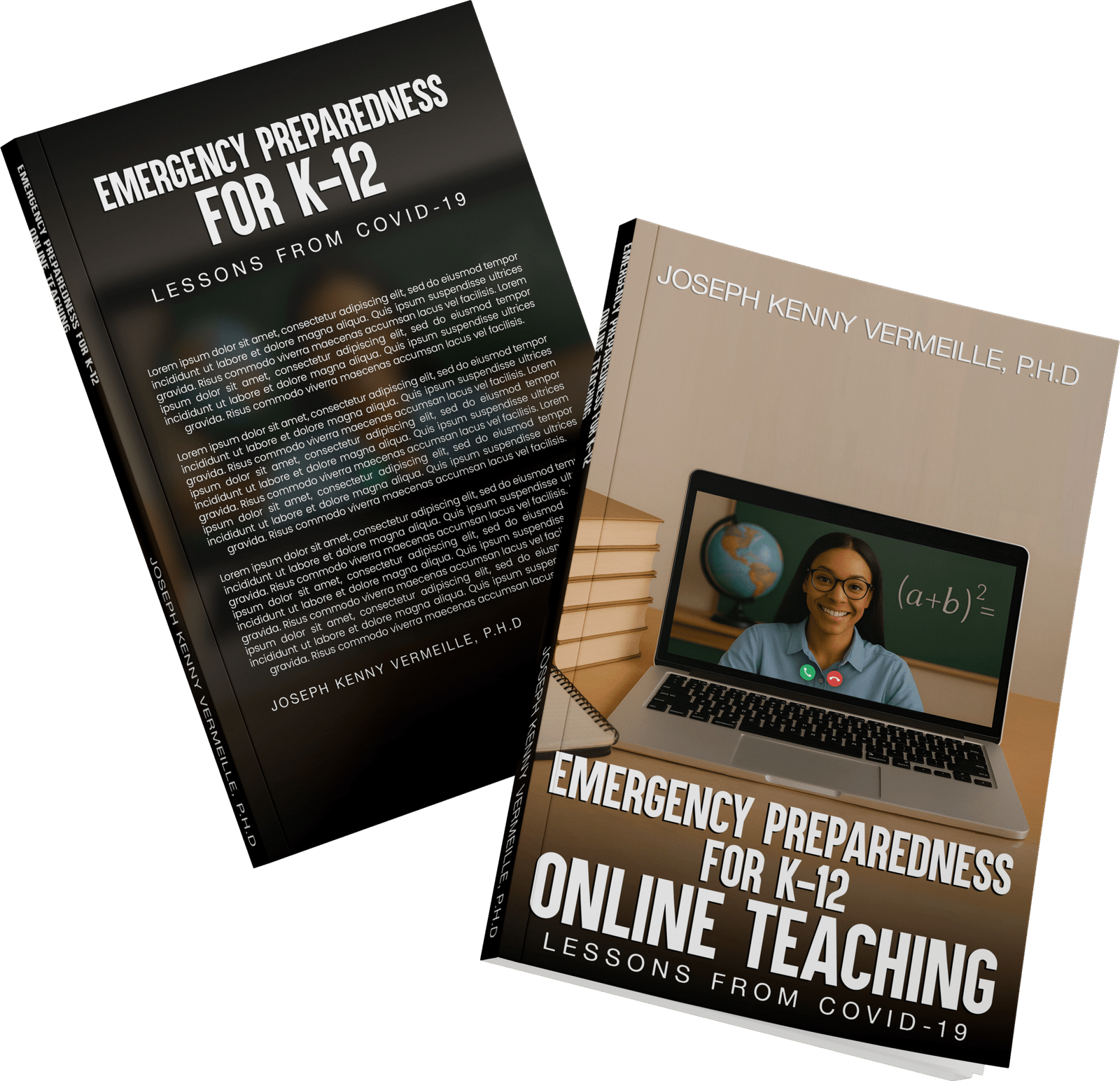
The Preface introduces the book’s origins in the COVID-19 crisis, emphasizing the urgent need for emergency preparedness that goes beyond traditional safety drills to include digital equity, instructional continuity, and teacher capacity. Drawing from qualitative research in high-tech U.S. states, it sets the stage for a forward-looking resource designed to equip educational leaders, policymakers, and practitioners with strategies for building resilient online teaching systems.
CHAPTER 1: Teacher’s Swift Transition to Virtual Teaching During COVID-19
xamines teachers’ experiences during the abrupt shift to online teaching, highlighting the adversity, resilience, and policy implications that emerged. Drawing on case studies from technologically advanced states, it reveals that access to technology alone is insufficient without structured training and institutional support, and underscores the importance of preparedness, professional development, and community support.
CHAPTER 2: Reconciling with the Unpreparedness
This chapter analyzes the widespread unpreparedness among educators forced into online teaching. Through qualitative and quantitative evidence, it identifies systemic gaps in teacher training, digital infrastructure, and emergency planning, and explores the resulting impacts on engagement and learning outcomes. The chapter calls for comprehensive reform in teacher education and school planning to prevent future crises.
CHAPTER 3: Inadequate Training and Professional Development
Chapter 3 critiques the shortcomings of professional development (PD) for digital instruction, showing that most PD was ad hoc and insufficient for online teaching demands. It advocates for continuous, blended, and adaptive PD models grounded in frameworks like TPACK, and stresses the need for ongoing, context-sensitive training, mentorship, and evaluation to build teacher digital competencies.
CHAPTER 4: Ensuring Equitable Technology Access
Focusing on the digital divide, this chapter details the socioeconomic, geographic, and racial inequities in technology access among K–12 students and educators. It explores policy, infrastructure, and community-based solutions—including public-private partnerships and digital literacy programs—to ensure all learners and teachers can participate fully in digital education, especially during emergencies.
CHAPTER 5: Comprehensive Plans for Emergency Preparedness
This presents the essential components of robust emergency preparedness plans for education, including technology procurement, communication protocols, and instructional continuity. It discusses scenario-based contingency planning, crisis management models like ICS and COOP, and the importance of regular testing, simulation, and iterative review to ensure plans remain effective and equitable.
CHAPTER 6: Fostering Collaborative Networks and Engaging Knowledge Brokers
This chapter highlights the power of collaboration and knowledge brokering in building educational resilience. It describes how professional learning communities (PLCs), cross-sector partnerships, and knowledge brokers help translate research into practice, support teacher adaptation, and foster a culture of continuous improvement and shared expertise during crises.
CHAPTER 7: Integration of Technology into Teacher Preparation Programs
This Chapter argues for a fundamental overhaul of teacher preparation programs to integrate digital pedagogy, online instructional design, and crisis management. It critiques the lack of hands-on digital training in traditional curricula and recommends experiential learning, blended models, and partnerships with technology providers to prepare future educators for both in-person and digital classrooms.
CHAPTER 8: Beyond the Internet K–12 Teaching and Learning in Disaster ScenariosPrograms
This chapter explores strategies for maintaining instructional continuity in high-tech, low-tech, and no-tech settings during disasters. Through global case studies, it demonstrates how schools can leverage offline digital platforms, radio, television, printed materials, and community networks to ensure all students continue learning, regardless of technological constraints.
CHAPTER 9: Recommendations and Practical Guide for Actions
This Chapter synthesizes lessons from earlier chapters into practical recommendations, tools, and frameworks for building resilient education systems. It provides pilot project models, evaluation metrics, scalable strategies, checklists, and templates to help schools and policymakers implement emergency preparedness plans tailored to diverse environments and needs.
CHAPTER 10: Policy Implications and Future Directions
This chapter elevates the discussion to systemic policy reform, advocating for the institutionalization of emergency preparedness, digital equity, and continuous improvement in national education frameworks. It emphasizes the need for inclusive governance, cross-sector collaboration, and investment in infrastructure, teacher training, and legal protections to ensure sustainable resilience.
CHAPTER 11: Best Practice K–12 Disaster Recovery Strategies and Resources
This chapter details best practices for disaster recovery in K–12 education, including the implementation of COOPs, ICS, blended learning models, and trauma-informed approaches. It stresses the importance of equity, emotional support, regular simulations, and flexible policies to support academic and psychological recovery, and highlights the role of community partnerships in building long-term resilience.
CHAPTER 12: Exploring the Resilient Future for K–12 Education
The final chapter synthesizes the book’s core insights and presents a vision for an ethical, inclusive, and adaptable education system. It calls for systemic transformation grounded in resilience, equity, and community engagement, and challenges stakeholders to institutionalize readiness and lead with compassion, ensuring every learner’s right to uninterrupted education.
Available Worldwide On Trusted Platforms:






What Readers Are Saying
Trusted By Educators, Researchers, And Thought Leaders
Lorem ipsum dolor sit amet, consectetur adipiscing elit, sed do eiusmod tempor incididunt ut labore et dolore magna aliqua. Pellentesque dignissim enim sit amet venenatis urna cursus eget nunc. Sed viverra ipsum nunc aliquet bibendum enim facilisis gravida neque.
Non blandit massa enim nec dui nunc mattis enim. Ut etiam sit amet nisl purus in mollis nunc sed.
- 5.0
As a school administrator, this book was a wake-up call. Dr. Vermeille brilliantly captures what our educators endured and provides real solutions. The blend of research and practical strategies makes it indispensable. I now feel more furnished to lead my team through any instructional disruption.
Rebecca Langston
- 5.0
Dr. Vermeille’s insights hit home. As a veteran teacher, I experienced the chaos firsthand. This book validates our struggles and, more importantly, offers a clear roadmap for better preparedness. Every educator and policymaker should read it our future depends on lessons like these.
Daniel Thompson
- 4.5
This book is a must-read for education leaders. It’s not just theory it’s filled with action plans, real-world case studies, and solutions for equity and training gaps. Dr. Vermeille speaks the truth we lived through and gives us a path forward.